Making Home While Waiting on the House
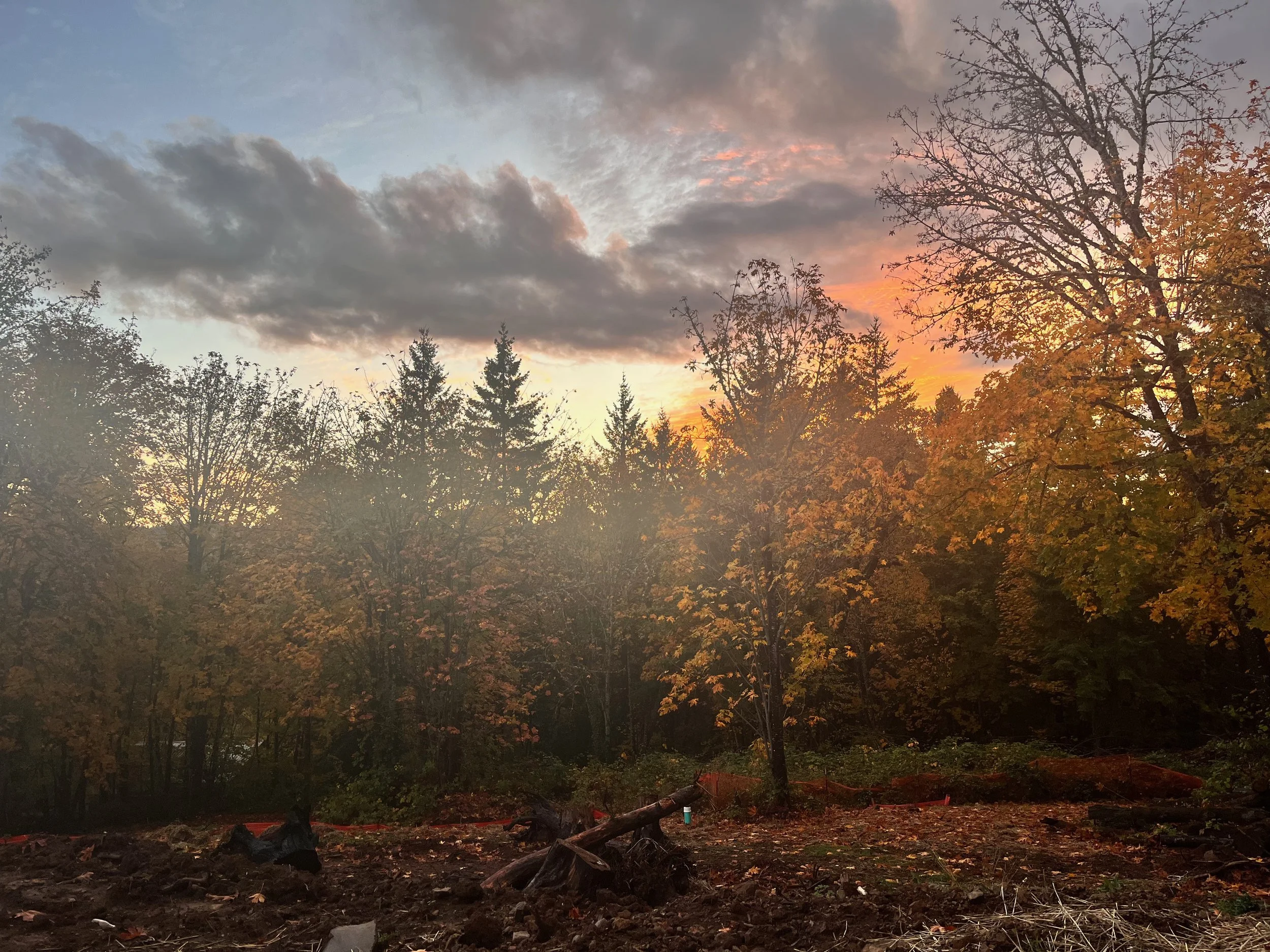
The property sits at the end of a winding country road, past a river and stretches of woods, far enough removed that the noise of everyday life fades almost without you noticing. When we first walked it, the five acres were wild in the most literal sense. Blackberries and briar had taken over. Weeds grew unchecked. Large trees crowded the slope, and there was really only one clearing that made sense for building, which may be why this part of the original seven acres was separated and sold off. It wasn’t the easiest land. It wasn’t the most convenient. But it was beautiful.
The lot backs up to a protected forest, with a creek and a pathway and more trees than you can count. Even the new houses going in above it can’t be seen from below. It feels like a small sanctuary, hidden in plain sight. I grew up in the country, and many of my childhood memories involve wandering through woods like these, learning where to step, where to listen, and how to pay attention. Being on that land felt like coming home in a way I didn’t need to justify.
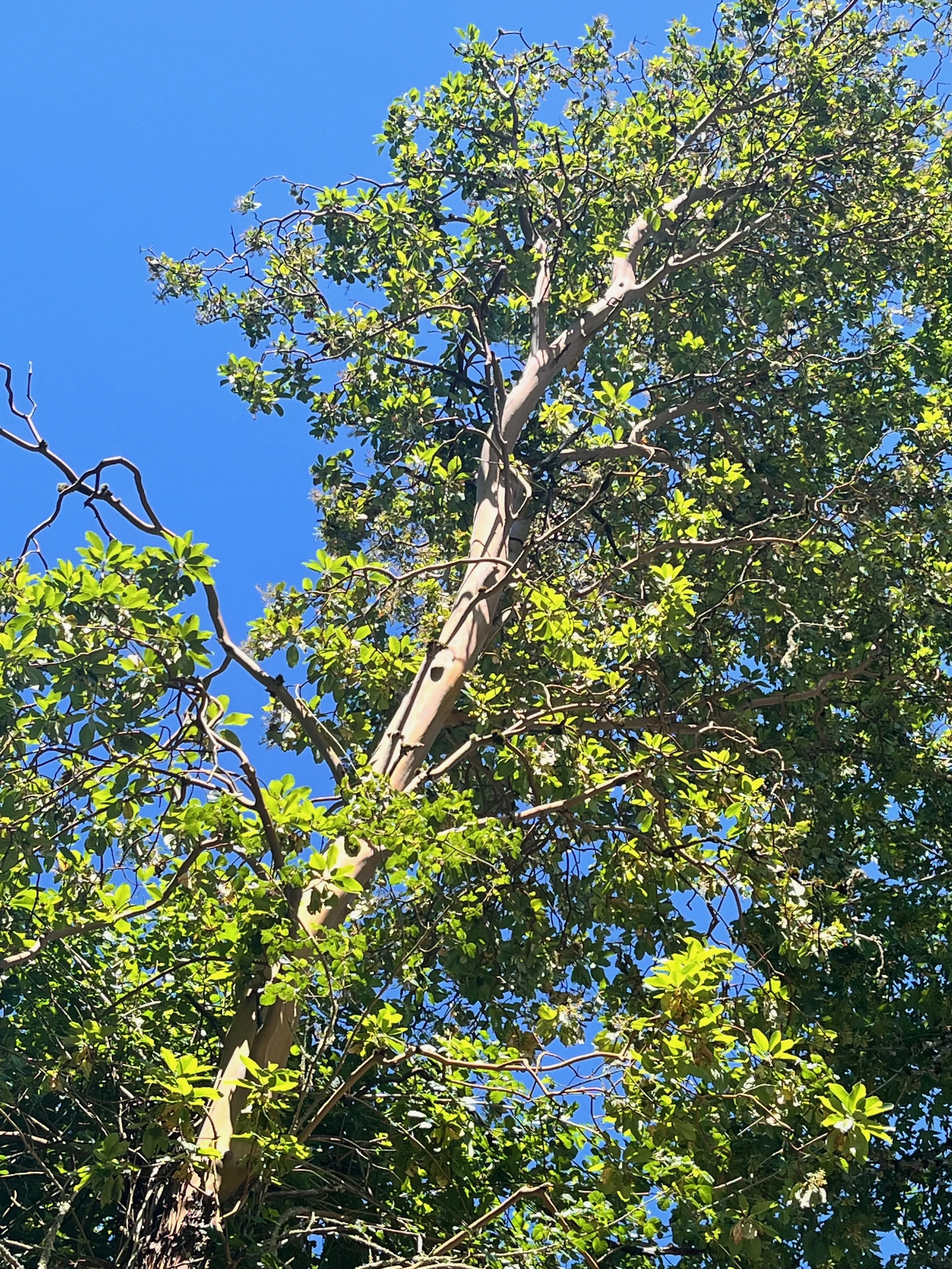
It was there that I first noticed the Madrone trees. They stood out immediately, not because they were the largest, but because they were so unlike the others. Their smooth trunks were shedding soft pink bark to reveal something glossy and green beneath, almost tropical in feeling, which seemed impossible in the cool, rainy Pacific Northwest. Their branches twisted toward the light in winding, determined lines. But what really caught my attention was the sound. The birds gathered there in numbers, loud and constant, as if that tree were hosting something the rest of the forest recognized as good.
I went home and began learning everything I could about Madrone trees. They are native to this region, even if they look like they belong somewhere warmer. They grow in difficult conditions, often along coastal cliffs and every part of them is useful. Over time, as we returned to the property, I noticed more of them tucked deeper into the woods, easy to miss unless you were looking closely. The studio name came later, but once it did, it felt inevitable. The land and this studio were both beginnings, both requiring patience, care, and a willingness to grow slowly.
When the property came up for sale in late summer of 2023, we didn’t have high hopes of getting it. We had already watched other parcels sell before we could even make an offer, often for more money and less land. This one felt like a gift even before it was ours. We made an offer that felt wise and responsible for our family, knowing it was under asking, and prayed a simple prayer. If this was where God wanted us, we asked Him to make it clear. If not, we asked for the patience to accept that.
The offer was accepted without a counter. That clarity felt unmistakable.
What followed, though, was not the forward motion I expected. I had imagined breaking ground in the spring of 2024, moving quickly, building toward a fall 2025 move-in. That timeline has come and gone. The waiting has been harder than I anticipated, especially as I’ve watched our children grow older and felt the ache of wondering how many years we might have had here already. There is a particular tension in loving a future you can’t yet step into.
Waiting has exposed something in me I already knew but didn’t always want to face. I am good at movement. I love ideas, momentum, the challenge of building something new. I struggle more with the slow, repetitive work of staying present when nothing seems to be changing. Over the years, I’ve learned that I can force outcomes if I want to, often under the banner of strength or determination, only to discover later that what I built didn’t have the depth or peace I hoped for. Again and again, the invitation in my life has been to wait on the Lord, to be still and trust that He is at work even when I can’t see it.
This season has brought that lesson close to home, literally.
As we waited, something else began to shift. I realized how much my heart had already left our current house in anticipation of the next one. It became easy to think, “When we have more space, we’ll gather more. When we have land, we’ll host. When we move, then home will feel complete.” But waiting longer forced a reckoning. If I wasn’t willing to be faithful with the home we already had, why would more change that? Contentment, it turns out, is practiced in the now, not earned later.
The verse from Psalm 127 kept returning to me: unless the Lord builds the house, those who build labor in vain. I had read it before, but it landed differently here. It became less about the eventual structure and more about the work God was doing in us while we waited. Each step forward, when it came, came because He moved first. And in the waiting, He was moving too, shaping my heart, teaching me to look around instead of ahead, to love the life already unfolding in front of me.
When it became clear that we weren’t ready to build the house, we began looking at smaller improvements. Eventually, we decided to build a cabana and put in a pool, still creating a place where our kids could gather with friends and make memories on the land before they leave home. Before those plans were even finalized, someone very dear to us entered a season of hardship and would soon need a place to live. Suddenly, the purpose of that smaller structure became clear. What felt like a delay revealed itself as provision.
Even now, we walk the land through the seasons. We know the plants. We recognize the deer when they step into the clearing, and they aren’t as afraid of us. We listen to the creek and watch how the light shifts as you move from the open spaces into the deeper woods. By the time we live there, the place will already know us.
I don’t know when the house will be built, or exactly what it will look like once it is. I still feel the pull toward what is ahead, and there are days when I have to resist the urge to measure progress only by what can be seen or finished. Waiting has not removed the desire, nor has it dulled the hope. It has required something harder and more honest: the repeated act of placing that desire back into God’s hands, even when I would rather move things along myself.
What has become clear, though, is that nothing about this season has been wasted. The land came to us at the right time, and provision has shown up precisely where it was needed, often in forms we could not have predicted. The delays I once fought against have revealed the steadiest kind of care at work, one concerned not just with what we will build, but with who we are becoming while we wait. God has been shaping trust, contentment, and attentiveness in us long before any walls rise from the ground.
Psalm 127 no longer reads like a warning to me, but like an invitation into alignment. Unless the Lord builds the house, the work will never bear the weight we expect it to carry. But when He is the one doing the building, even the waiting has purpose. The preparation matters. The tending matters. The unfinished is not a failure, but part of the formation.
So we are making home now, not later. We are doing it in the way we care for the land, in the way we gather people around us, and in the way we choose to be fully present where our feet are planted today. The house will come when it is meant to come. Until then, we will continue to trust that God is building something solid here that does not depend on our timelines in order to be good.